Audited dates, missing fields and recipient categories
VERIFIED CASE STUDY · PUBLIC-INTEREST ANALYTICS
Who Funds UK Political Parties?
A reproducible audit of 65,278 Electoral Commission records, separating private donations from public funding and measuring donor concentration, election-cycle funding and reporting quality.
PythonSQLTableau
01 · CONTEXT
From a broad concern to testable questions.
Business problem
Can the published donations register be trusted as-is, and how exposed is each party to losing a small number of major donors?
Questions explored
- Which records and dates need correction before analysis?
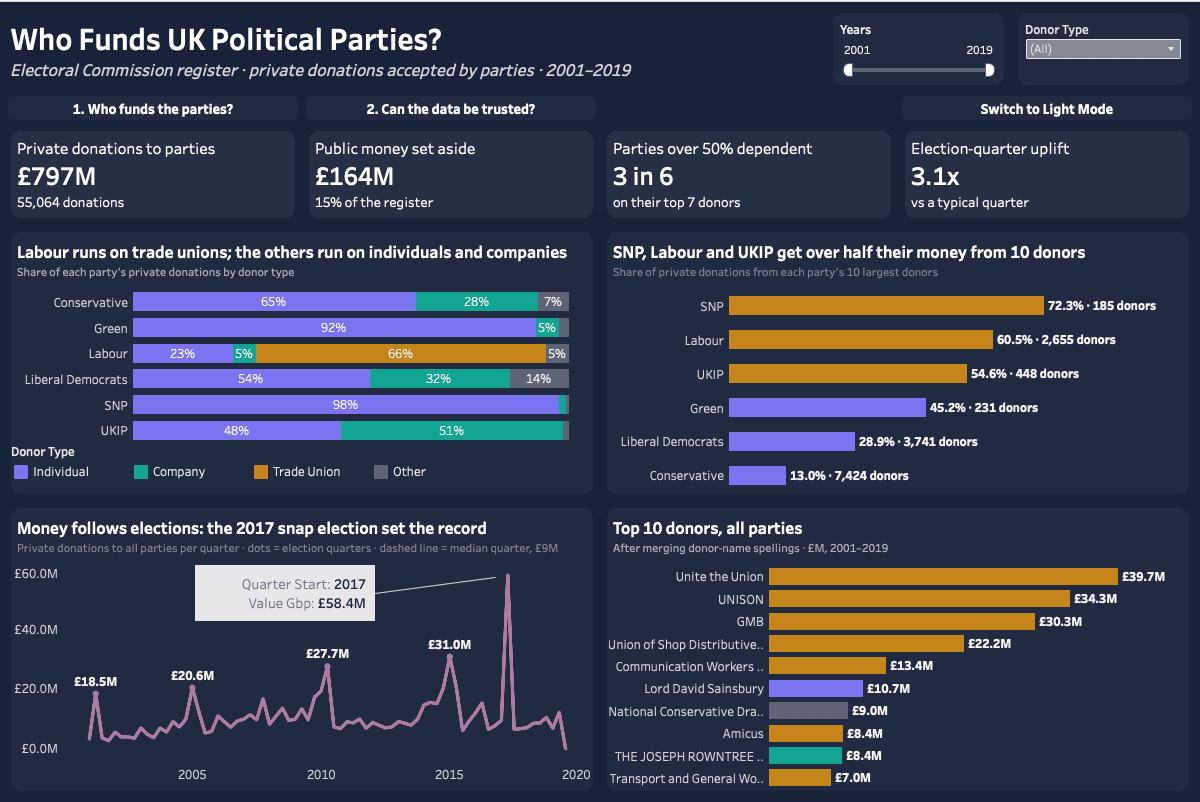
- Where does party funding come from, and how concentrated is it?
- Do election cycles and recipient types affect reporting patterns?
Dataset
Electoral Commission register of donations: 65,278 records and £1.09B recorded from January 2001 to September 2019.
02 · ANALYSIS
A transparent path from preparation to interpretation.
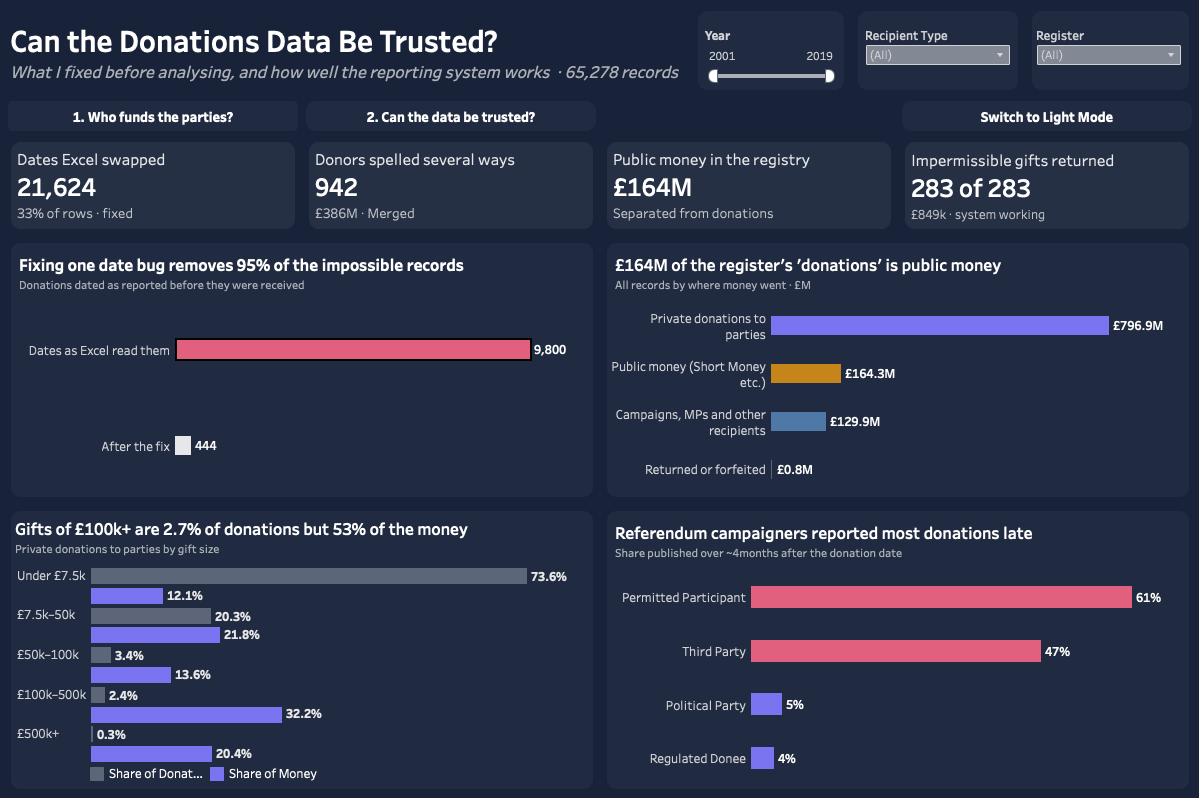
Corrected 21,624 Excel-swapped dates
Merged 942 donor naming variants and separated £164M of public funding
Built SQL analyses and two interactive Tableau dashboards
03 · DASHBOARD
TABLEAU DASHBOARD GALLERYTwo views of the analysis
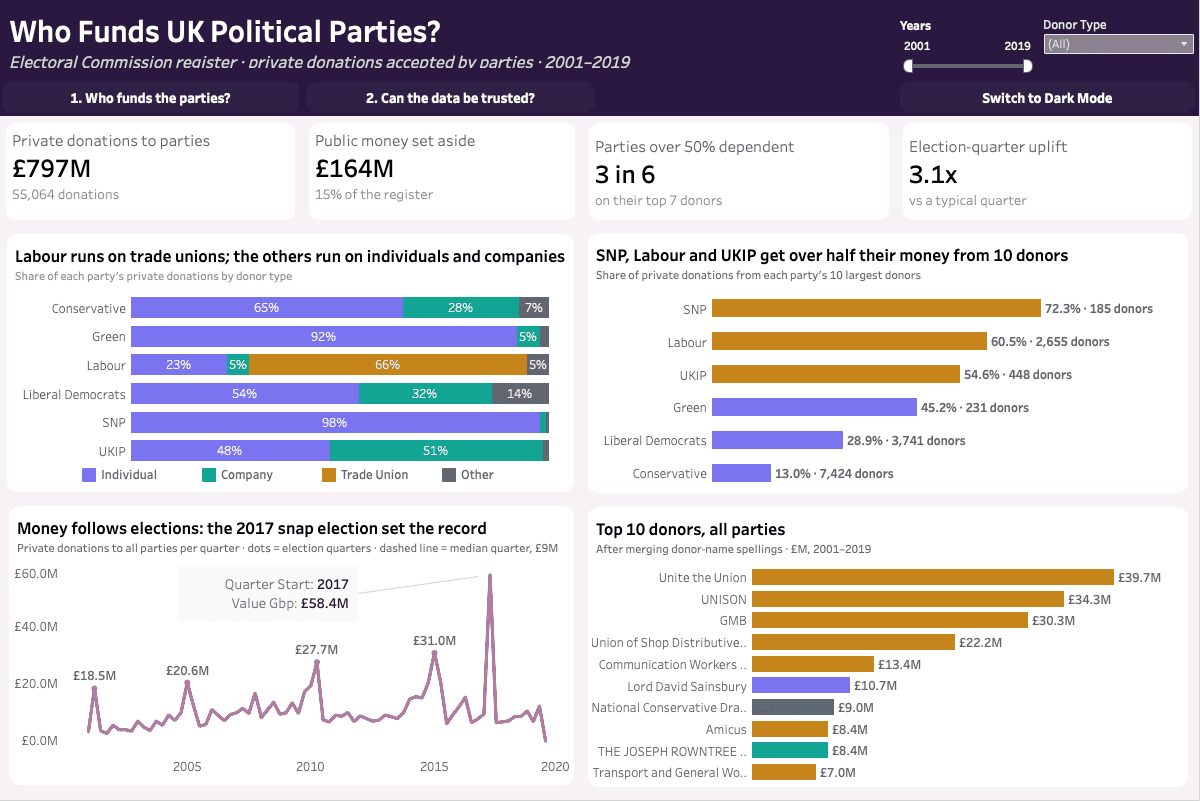
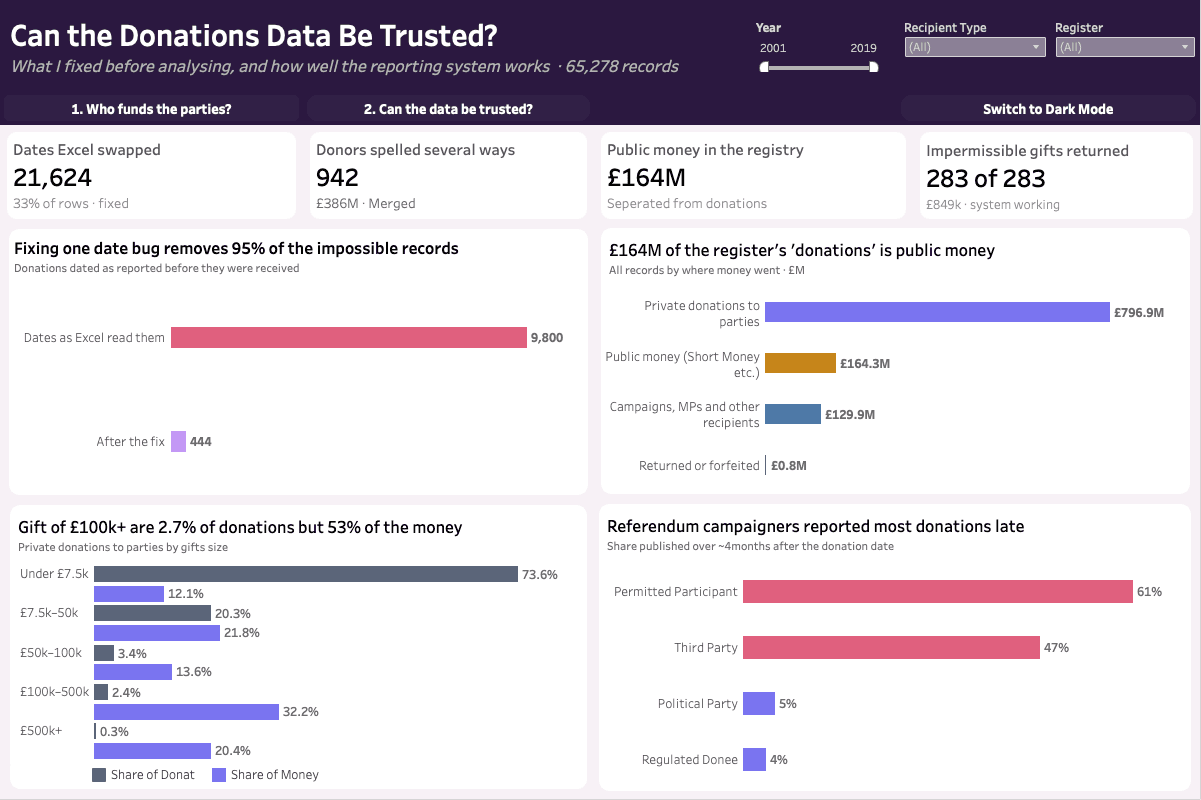
Hover or focus on a dashboard to preview its light mode.
04 · FINDINGS
What the analysis surfaced
01SNP, Labour and UKIP received 72%, 60% and 55% of their private funding from their ten largest donors.
02Donations of £100k or more were only 2.7% of records but represented 53% of private party funding.
03The 2017 snap-election quarter set the record at £58.4M, while referendum campaigners reported 61% of gifts after roughly four months.
Recommended next moves
01Publish dates as YYYY-MM-DD so spreadsheet software cannot silently swap day and month.
02Assign stable donor IDs and standardised names to make concentration analysis reliable.
03Track top-10 donor share and focus verification on large gifts and election-period reporting.
LIMITATIONS
What the analysis does not establish.
- The register ends in September 2019 and does not cover later elections.
- Name-based merging may combine different individuals who share a name.
- The four-month reporting threshold is an analytical benchmark, not a legal finding.
NEXT CASE STUDY
Continue exploring